
 Author: The NOW Team
  Date: February 2026

534
TotalViews
As of the writing of this article, there is only one month left before the Empowering Consumers for the Green Transition Directive (ECGTD) must be transposed by European Union (EU) Member States into national law. Deadline date – March 27, 2026.
– Italy has taken the lead in transposing ECGTD into national law on November 5, 2025.
– The German Government published a draft law in September 2025 to transpose the ECGTD into the German Act against Unfair Competition (UWG).
– Other EU Member States – Belgium, France, Ireland, The Netherlands, Spain and Poland – are moving forward with the transposition process.
The ECGTD, often abbreviated as EmpCo, aims to better protect consumers from misleading sustainability claims and focuses on helping EU consumers make informed, sustainable choices; prohibit misleading claims (greenwashing), such as vague or unproven sustainability promises; and provide better information about sustainability, lifespan, repairs and warranties of products and services.
The ECGTD will impact all companies with sustainability related claims targeting the EU consumer in the EU and abroad. Businesses are well advised to prepare for compliance, especially given the significant lead time required to change to a sustainability scheme audited by an independent accredited Certification Body. Companies should start reviewing and updating product descriptions, labels, packaging, and advertising as well as developing implementation plans for future environmental targets, sustainability strategies and programs. Today, delayed compliance by hoteliers will be interpreted as complacency or deliberate misrepresentation and misleading, and attempting to position their business as ‘responsible’ will look absurdly out of step and non-compliant with a touch of arrogance.

WHAT HOTELIERS NEED TO DO
At this most urgent of time, A.C.T.I.0.N. (Accountability, Compliance, Transparency, Income generation, zer0 emissions, and Nurturing SDGs) is vital.
1. Make sure your sustainability claims are evidenced, substantiated, credibly verified and accessible by
March 27th!
All sustainability related claims must be backed by science-based evidence, audited by an independent, accredited Certification Body and its communication must be accessible to stakeholders in at least one official language of the country where the information is visible. Hoteliers have two choices! Talk about verified sustainability … or HUSH and do not talk about sustainability.
2. Know the serious consequences!
Fines and penalties are high for greenwashers … and reputational damage is ensured.
CERTIFICATION VS ACCREDITATION
In tourism, the only casualties in the current confusion and greenwash quagmire are the hotels and destinations that genuinely believe they are working with certification programme with independent, accredited audits.
In Europe, there is a binding EU Regulation – Regulation (EC) No. 765/2008 – that sets the legal framework for Accreditation and Third-Party Certification.
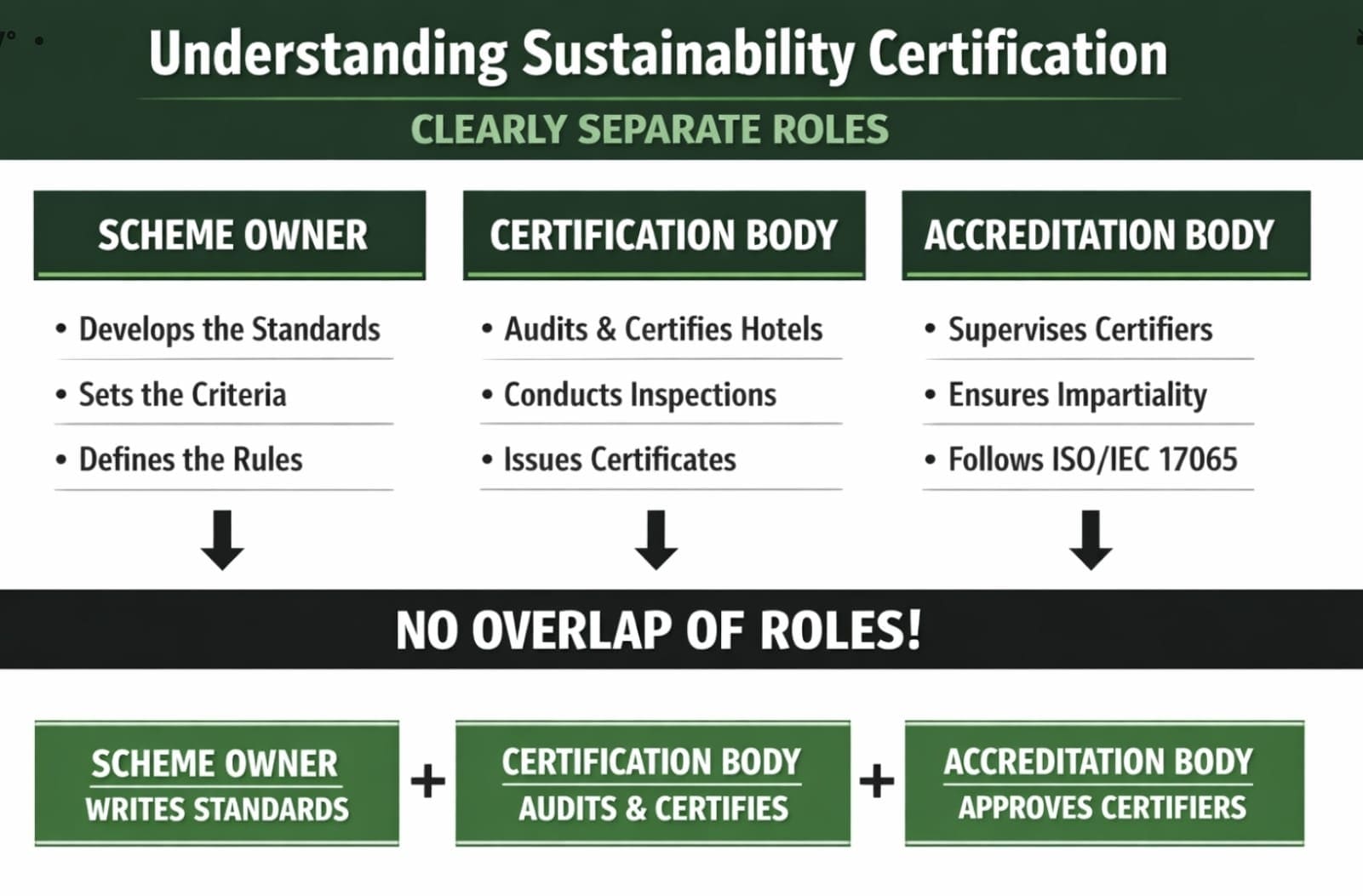
THE COST OF SUSTAINABILITY
Compliance with EU sustainability related laws are not cheap or easy to achieve. The ECGTD and the Corporate Sustainability Reporting Directive (CSRD) is characterized by high levels of accountability and transparency, therefore the initial investment for compliance is high to seriously advance sustainability and deliver on net zero goals. Rather than just an ethical choice, it is a strong, long-term financial investment offering significant ROI through reduced operational costs (up to 30% savings) including lower utility bills (LEDs, HVAC optimization) and provide access to sustainability linked loans. It provides a competitive edge, increase asset value and attractiveness to eco- conscious guests, and considered a better risk management against future climate regulations. The cost of independence, credibility, regulation protection, legal accountability and consumer trust is priceless.

VIEW Be in Good Standing – European Sustainability Framework and Insights


