Author: Andres Fellenberg Van der Molen, Founder & Director - Green Partner
  Date: August 2026

217
TotalViews
Consumers are increasingly alert to sustainability claims and expect businesses to substantiate what they communicate.
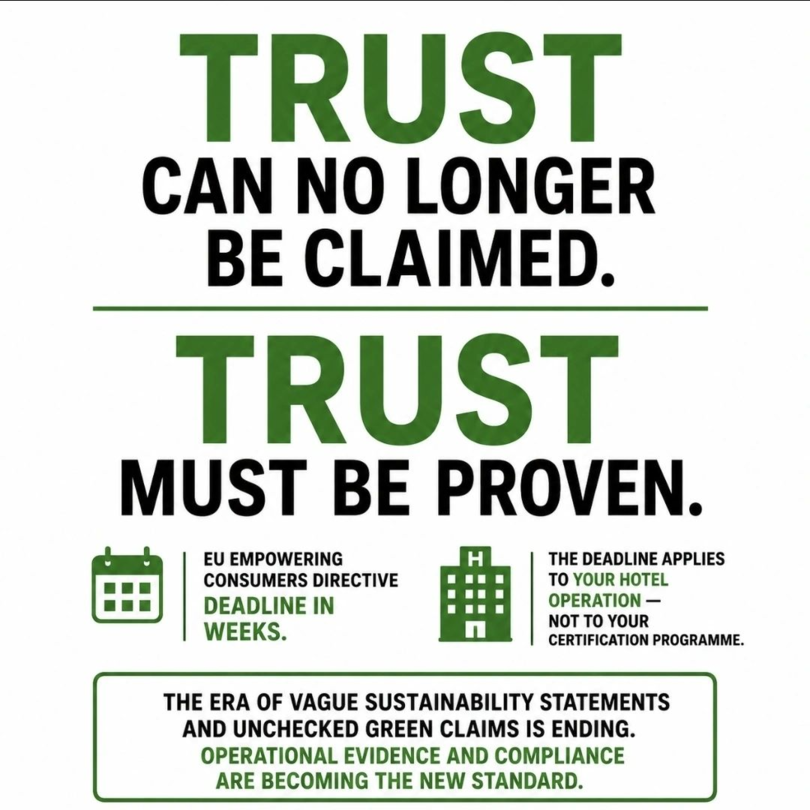
The EU Empowering Consumers for the Green Transition Directive (Directive (EU) 2024/825, commonly referred to as EmpCo) strengthens EU consumer-protection rules against misleading environmental and social claims. Member States were required to transpose the Directive by 27 March 2026, and the national legal measures are to apply from 27 September 2026.
In June 2026, the European Commission also published stakeholder Questions & Answers to support coherent application of the new EmpCo rules.
For hotels, EmpCo is particularly relevant wherever sustainability performance is communicated to consumers: websites, booking journeys, advertising, social media, sustainability pages, labels, logos and other commercial communications. The central issue is not simply whether a hotel holds a sustainability certificate. It is whether the claims presented to consumers are accurate, specific, supportable and consistent with the hotel’s actual practices and evidence.
In practical terms, a hotel should be ready to demonstrate:
– What it claims (Supported by appropriate EVIDENCE)
– What it does (Demonstrated through CONSISTENT implementation)
– What it can substantiate (Communicated with sufficient TRANSPARENCY)
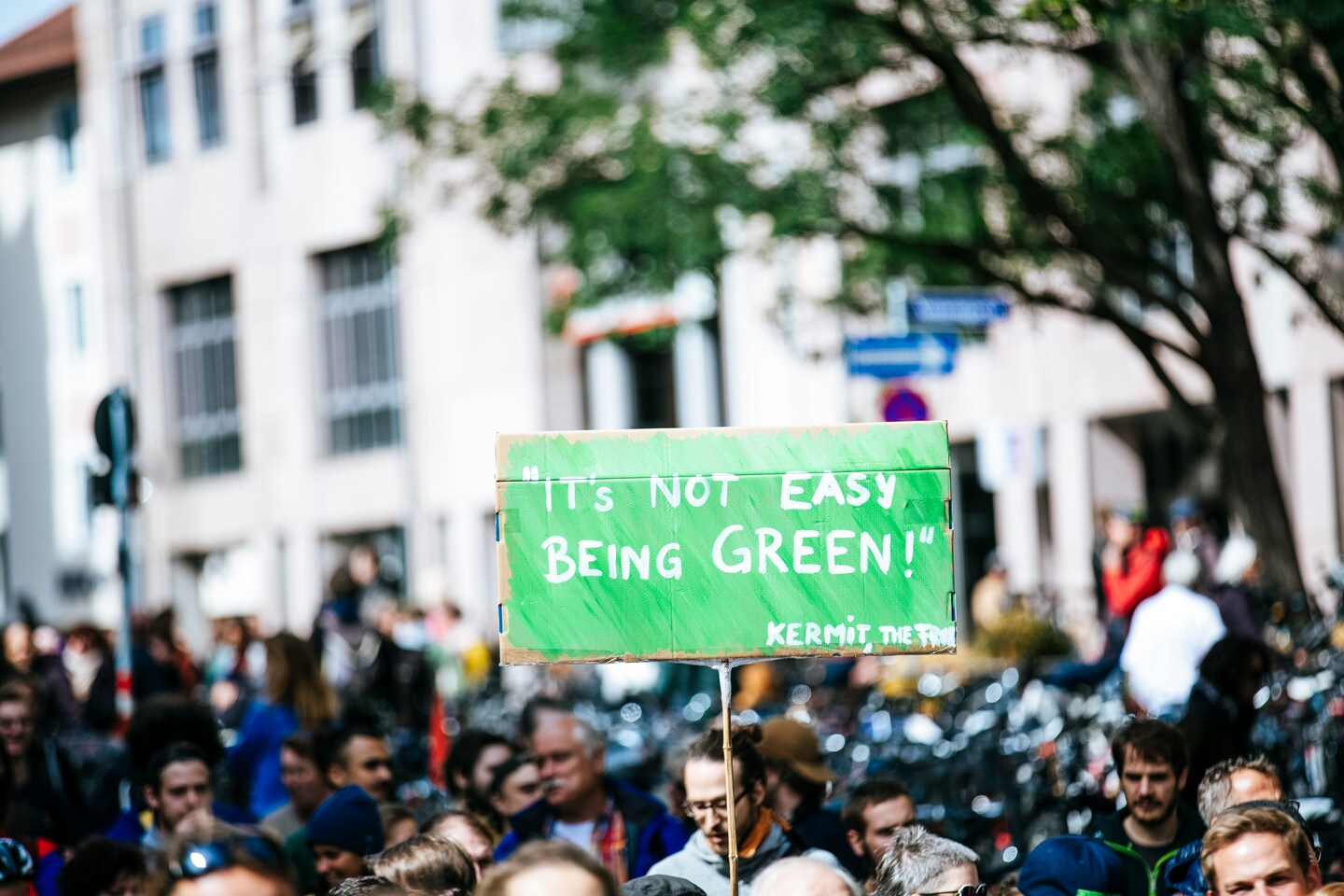
Credit: Markus Spiske
CERTIFICATION SUPPORTS CREDIBILITY & EVIDENCE DEMOSTRATES COMPLIANCE
EmpCo is consumer-protection legislation. It is not a hotel certification programme, and it does not turn a sustainability certificate into a compliance shield.
Certification can nevertheless play an important role. Hotels should work with recognised, legitimate certification schemes and competent, independent third-party certification or conformity-assessment bodies whose governance, verification arrangements and scheme requirements can withstand scrutiny.
Under EmpCo, a sustainability label may only be displayed where it is established based on a genuine certification body. EmpCo defines such a scheme around transparent requirements, procedures for non-compliance and objective third-party monitoring, with the verifier’s competence and independence grounded in relevant international or national standards and procedures.

Credit: Lucas Mendes
A credible certificate can strengthen the evidence base and demonstrate that defined requirements have been independently assessed. It does not give the hotel immunity for separate claims it chooses to make.
The certificate is one part of the evidence architecture and the hotel remains responsible for ensuring that its consumer-facing communications accurately reflect what is certified, what is implemented and what can be substantiated.
A certificate can support your sustainability story. Your evidence, communications and actions must substantiate it.
Under EmpCo, EVIDENCE + CONSISTENCY + TRANSPARENCY = CREDIBILITY
The management question therefore needs to move beyond: “Do we have a sustainability certificate?”
It should become: “Can we demonstrate, with credible evidence, the sustainability claims we make to our guests?”
NOW TOOL SOLUTION
From 27 September 2026, hotels should be prepared to demonstrate that consumer-facing sustainability communications comply with the applicable national measures implementing EmpCo. This requires more than possessing policies or displaying a certification logo; it requires disciplined control of the claims themselves and the evidence behind them.

Credit: Vitaly Gariev
A practical response is to establish a structured claims-management and communication process: identify each sustainability claim, define exactly what it means, retain the supporting evidence, confirm that the evidence remains current, assign ownership, and ensure that qualifying information is presented clearly and prominently where required. This creates an auditable link between what the hotel says and what the hotel can demonstrate.
NOW supports this process through a website Quick Scan designed to identify potential EmpCo-related claim risks and propose clearer alternatives, together with the NOW Sustainability Reporting Tool (NOW Tool), a structured framework designed:
– to consolidate achievements and evidence arising from sustainability certification and wider hotel sustainability programmes;
– to monitor, manage and demonstrate sustainability performance and the evidence supporting communicated claims; and
– to present sustainability information and progress consistently and transparently, supporting both compliance preparation and credible third-party certification.
The NOW Tool creates a consistent sustainability narrative for stakeholders including employees, owners, guests, media, travel operators, suppliers, regulators and third-party certification bodies, irrespective of the sustainability scheme selected by the hotel.

Credit: Antonio Janeski
The NOW Tool feature images, graphics, text and voice to help make sustainability data and supporting evidence easier to explain and understand, engage stakeholder support and invite their feedback, and includes a Direct Booking link to support commercial conversion.
For hotel groups, NOW can develop a branded dashboard to give central access to participating hotels’ sustainability reporting and supporting evidence, while enabling bespoke reporting of key sustainability performance information.
The NOW Tool is designed for hotels with sustainability certification programmes and operations with different levels of capacity, resources and budget. Its mandatory and voluntary pages can provide direct multi-lingual access to the hotel’s Sustainability Framework & Evidence with relevant sustainability certificates, plans, policies, reports and supporting information as required by EmpCo.
The objective is not to treat the certificate as the claim, but to connect the hotel’s communications with the evidence that explains and substantiates them.
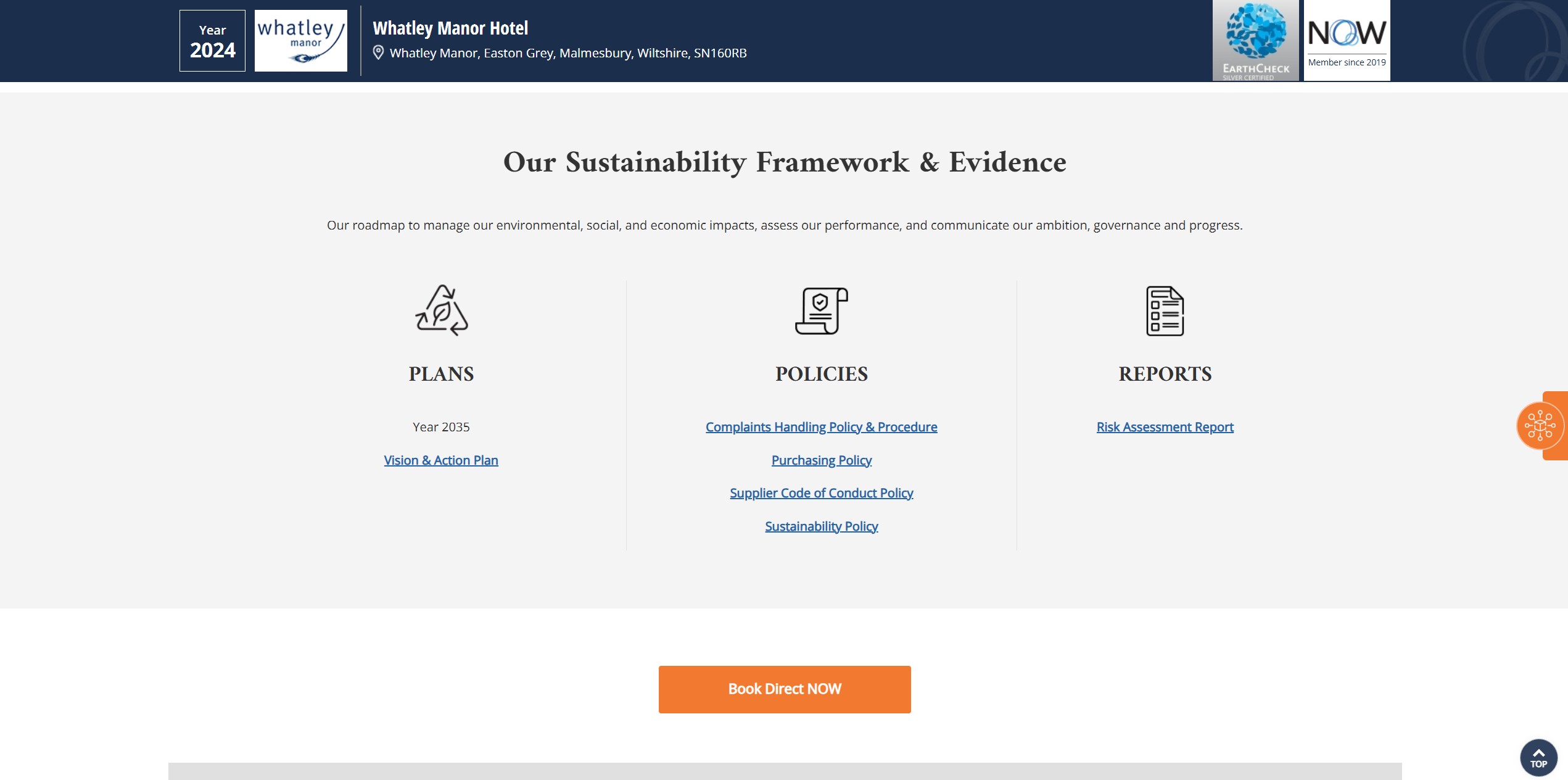
Credibility and transparency are foundations of brand integrity. Under the strengthened EU consumer-protection framework, they also need to be demonstrable.
5 CHECKS FOR CREDIBLE HOTEL SUSTAINABILITY CERTIFICATION
Sustainability certification can be a valuable part of a hotel’s evidence framework, but hotels should understand exactly what stands behind the label they display. EmpCo increases the importance of distinguishing credible third-party verification from labels or claims that cannot demonstrate the required governance, independence and monitoring.
Before relying on a sustainability certificate or label in consumer communications, confirm that the scheme and the organisation carrying out the assessment are legitimate, transparent and appropriately independent. Where accreditation is claimed, verify its scope and status with the relevant recognised accreditation body.
Accreditation can provide additional assurance of competence and impartiality, but the legal EmpCo test for a certification scheme is broader and should be checked against the Directive’s criteria.

Credit: Jakub Zerdzicki
If these points cannot be evidenced, the appropriate response is not alarm but due diligence: clarify the scheme’s status, correct unsupported communications, strengthen the evidence trail and, where necessary, move to a certification arrangement that can demonstrate credible governance and independent verification.
Check Point #1:
Confirm that the sustainability label is based on a certification scheme that meets the EmpCo criteria, including publicly available requirements, transparent access, stakeholder-informed requirements, procedures for non-compliance and objective third-party monitoring.
Where the certification body or scheme claims accreditation, verify the accreditation directly with the relevant national or internationally recognised accreditation body and confirm that the applicable scope covers the certification activity being relied upon.https://global-aci.org
Do not rely on a logo, directory entry or marketing statement alone. Retain evidence of the scheme rules, certification scope, verification basis and the status of any claimed accreditation as part of the hotel’s due-diligence file.
Check Point #2:
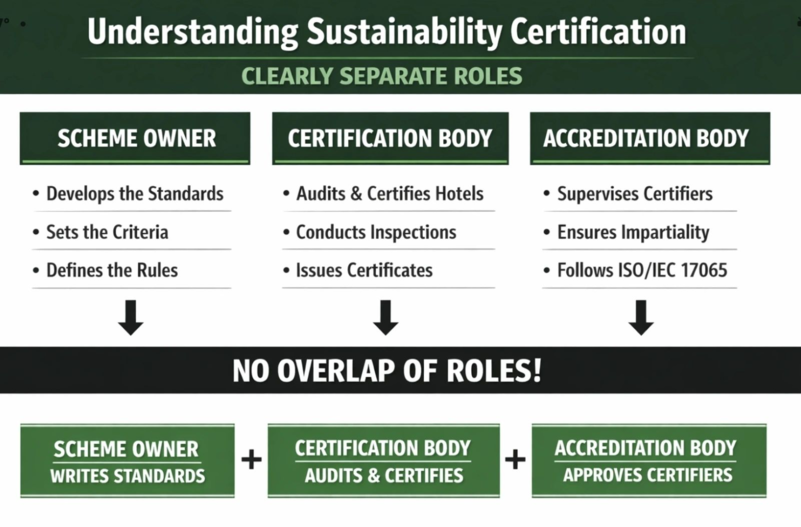
Verify who actually conducts the third-party assessment, what organisation takes the certification decision, and whether its competence and independence from both the scheme owner and the hotel are demonstrable through recognised standards and procedures.
Check Point #3:
Confirm that the auditor or assessor is demonstrably competent for the scope being assessed and is formally authorised by the responsible certification or conformity-assessment body. Auditor competence should be supported by appropriate qualifications, sector knowledge, audit experience and documented appointment.
Check Point #4:
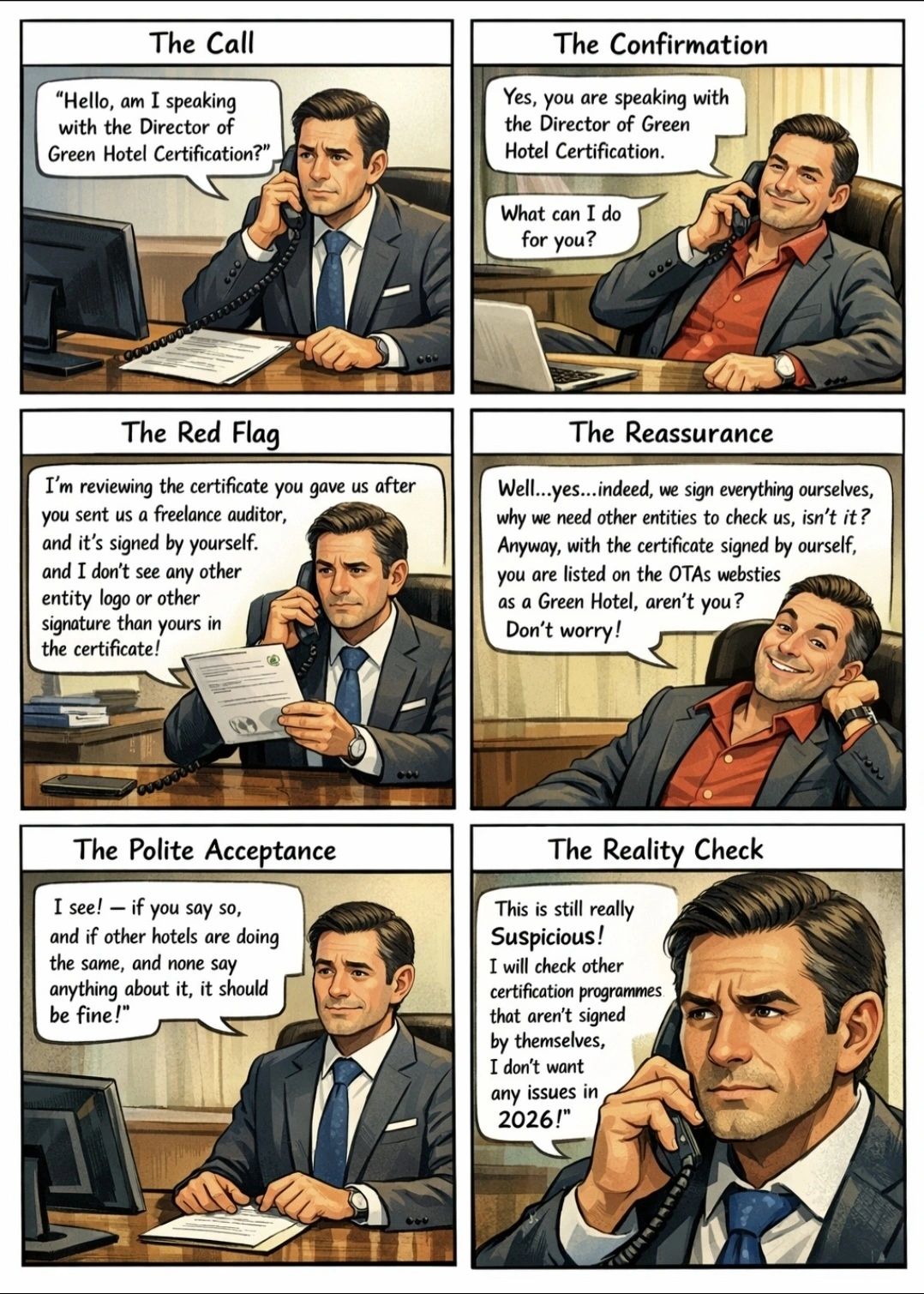
Protect impartiality. Where a consultant has helped the hotel design or implement the sustainability system, ensure that the certification decision and independent assessment are not compromised by consultancy conflicts of interest.
Check Point #5:
Understand what the certificate actually verifies. Review the scope, criteria, scoring methodology, exclusions and surveillance arrangements. A headline score or aggregated rating should never obscure material weaknesses or be used to support a broader environmental claim than the underlying evidence justifies.
Note from NOW Founder
The author Andres von Fellenberg van der Molen leads Green Partner & Consultancy B.V., a consultancy specialising in sustainability, and he is a Lead Auditor in Hotel Sustainability for Accredited Conformity Assessment Bodies.
Green Partner understands the critical importance of sustainability reporting in today’s business environment and provides the expertise and tools necessary to ensure organisations meet regulatory requirements and achieves their sustainability goals. Green Partner’s comprehensive approach help enhance transparency, build stakeholder trust, drive strategic improvements in sustainability performance and delivers discreet, sustainable solutions tailored to diverse industries with expert precision and care. They ensure rigorous internal audits, maintaining integrity and compliance across all hotel operations.