
 Author: The NOW Team
  Date: December 2025

2062
TotalViews
2025 is the window for smart hoteliers to prepare smarter, knowing that the next phase of sustainability is about evidence proof, and not more pledges to do good.
In early 2026, the hospitality sector enters an era of accountability, compliance and transparency as the European Union (EU) leads the way to enforce regulations to battle greenwashing and protect consumers and the environment. Rigorous sustainability reporting will become a competitive advantage and measured data with credible audits will determine who leads.
THE BLUNT REALITY

Hotel Owners and Hoteliers in Europe have known for years that regulations around sustainability reporting, certifications and communications will severely impact their business.
Some Hoteliers chose to be leaders with purpose and accountability by implementing science-based certifications with independent audits and proactively protecting their brand and reputation. However, many Hoteliers may have received the wrong advise and they chose to wait for the laws to be applied, convinced that the implementation of EU Directives will be a long process, or may not happen at all, resisting what is perceived as high-maintenance certifications that cost more and require change that stifle their voluntary sustainability efforts.
Regulatory scrutiny and oversight are seriously needed since many sustainability certification schemes without a 3rd Party audit by an accredited Conformity Assessment Body have misled both hotels and consumers. In tourism, the only casualties in the current confusion are the hotels and destinations that genuinely believe they are working with the correct and credible certification programme.
As of the December update of this article, there is only around 3 months before the directive on Empowering Consumers for the Green Transition (ECGT) becomes law on March 27, 2026. This will impact all hotels with green claims targeting the EU consumer.
“2026 is around the corner! Don’t wait for a fine to wake up,” Andres reminded. “Hotels must urgently prepare for a shift from ‘feel-good marketing’ to ‘evidence-based compliance.’ This is not just about transparency but legal accountability, consumer trust, and market credibility. Inaction will be interpreted as complacency or deliberate misrepresentation and misleading, and attempting to position hotels as ‘responsible’ will look absurdly out of step and non-compliant with a touch of arrogance.”
WHAT HOTEL GMs SHOULD PRIORITISE NOW?
1. An internal audit and baseline review
Irregardless of where you are in your sustainability journey, and whether you have certification scheme or not, invest in a Sustainability Specialist with credible credentials* to conduct an internal audit and a solid baseline assessment to get clarity on your biggest cost and carbon drivers. Know where you stand and where to save money with little or no investment.
This should include a review of sustainability knowledge, practices, training, measurements, certification, audits, Environmental Management System and regulation compliance. The final detailed report should identify gaps and where to save money, determine strategies to enable a professional, structured, and defensible pathway towards accountability, compliance, transparency, genuine leadership action that reduce regulatory exposure and provide the hotel with a clear head-start in proving operational integrity.
*Credentials: Training and certification for ISO14001 Lead Auditor Course and a science-based sustainability certification Coordinator and Auditor Course (ie. ISO14001 Environmental Management System, EarthCheck or EU Ecolabel). Third-party sustainability scheme auditor with an accredited Conformity Assessment Body (ie. Control Union).
2. Build capacity and manage regulatory risk to brand and reputation.

I. Appoint a person in the hotel team who is passionate about sustainability and invest in extensive training, or hire a qualified Sustainability Coordinator. IF unavailable, retain a specialist with credible credentials* to provide an external sustainability coordinator service and focused training relevant to management and departmental staff.
II. Implement a science-based certification programme and establish a framework that embed sustainability into daily operations. Build a culture of accountability — empower every team member to identify savings and sustainability improvements.
III. Prepare and/or review pre-audit reports and rehearse the audit day activity with a qualified Sustainability Specialist to ensure there are no major non-conformities – failures to meet specified requirements from standards (i.e. ISO 14001) or regulations.
IV. Arrange an independent audit by the accredited Conformity Assessment Body that manages, audits and certifies the sustainability programme.
3. Build a transparent disclosure system.

Establish Sustainability Reporting for a transparent and open two-way communication that informs and engage stakeholder support. It should simplify complex sustainability with measured evidence proof and make it easier to explain and understand.
The NOW Sustainability Reporting Tool makes it simple to communicate to stakeholders why the hotel is a Force for Good, What’s Good Inside and Outside, Eco and Social Footprints with evidence reports and SDG Actions. It also includes a Direct Booking Link and welcome stakeholder feedback to improve sustainability performance and communication to avoid any perception of greenwashing.
VIEW examples:
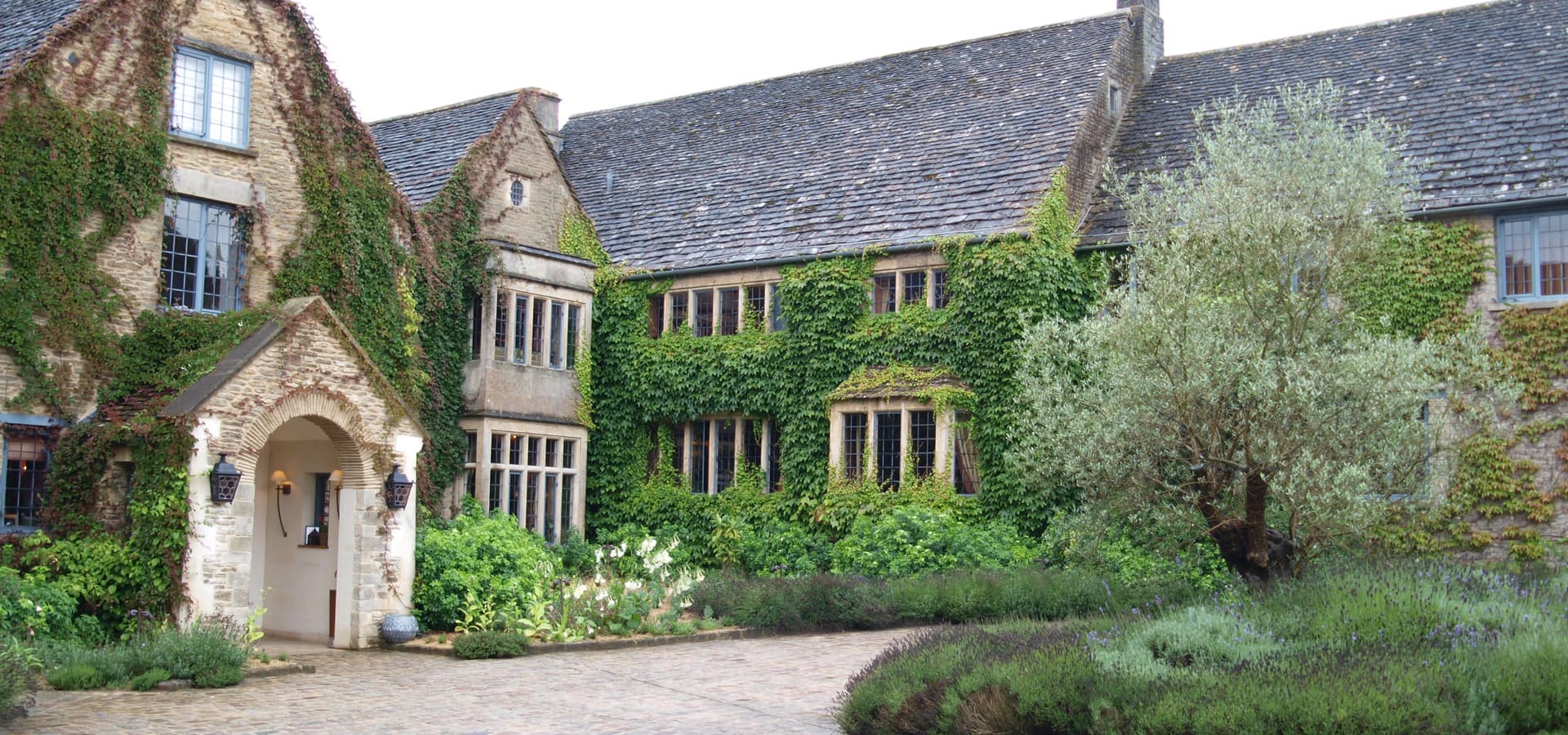
– Whatley Manor in the Cotswolds, UK
– Grand Hotel Huis ter Duin in The Netherlands
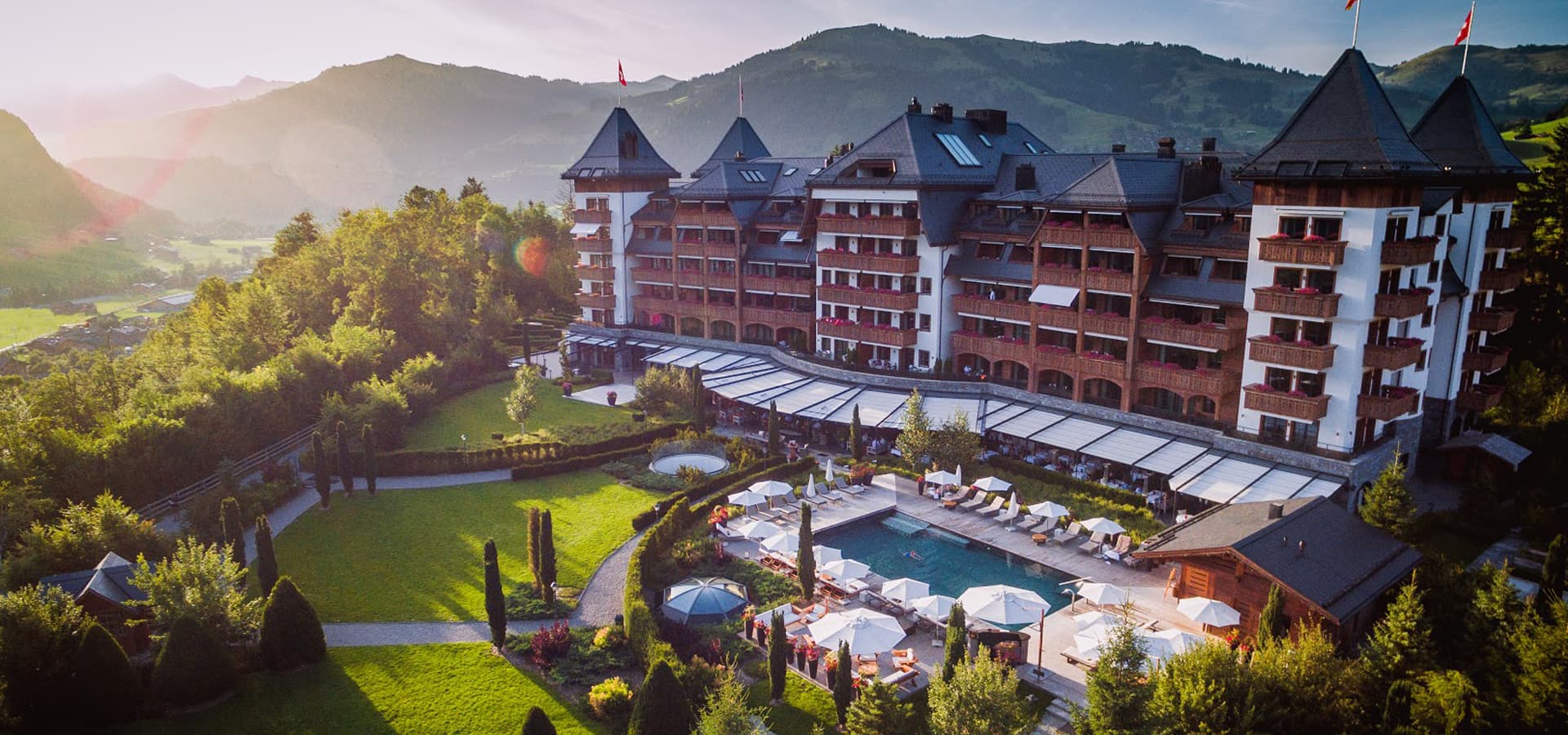
– The Alpina Gstaad in Switzerland
Align data flows early to upcoming Corporate Sustainability Reporting Directive (CSRD) which will require large companies to report on Double Materiality – both their financial risks and their impacts on people and the environment to provide comprehensive information to investors and stakeholders. NOTE: These large companies will increasingly require the SMEs they support to provide evidence of their carbon footprint measurement and sustainability
4. Differentiate through guest experience
Communicate results that link sustainability to asset performance and guest experience using verified metrics in marketing and investor reports … and not claims that mislead.
HOTELIERS FACE SIGNIFICANT IMPACTS
In 2025, European countries are concerned about the ongoing impacts of climate change, particularly droughts in northern and western Europe; increased flooding in the Iberian Peninsula, central Italy, the eastern Alps, and Greece; and intense heatwaves, with Southern Europe (Spain, Portugal, Italy, France, Greece and the Netherlands) bearing the brunt of the extreme temperatures.
Man-made climate change is accelerating, posing significant risks to a hotel’s physical asset and financial performance through damage to infrastructure and disruptions to operations. Damage from extreme weather events like hurricanes and floods, rising sea levels leading to coastal erosion, and water scarcity affect hotel operations and guest experience, and can lead to loss of sales, increased costs due to disruptions in supply chains, rising insurance premiums, and the need for costly adaptations.
Heatwaves are increasing in frequency and intensity across Europe, with the continent experiencing a faster rate of warming than the global average. In the first few weeks of August, a new, long-lasting Heat Dome strengthens from southern to western and central Europe, breaking historical records with temperatures into the low 40s.
European hoteliers face significant impacts from both climate change and evolving environmental regulations. Climate change is impacting tourism demand and operations. Simultaneously, new EU regulations are pushing for greater sustainability accountability, compliance and transparency, requiring hoteliers to urgently adapt their practices and communication strategies.
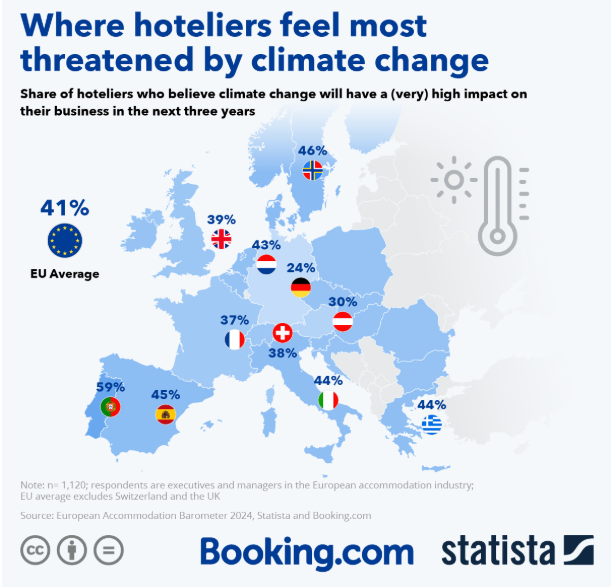
According to a recent survey conducted by Statista and Booking.com, there is great concern within the European hotel industry about the high impact of climate change on their businesses in the coming years.
44% of hoteliers in Greece are concerned about the impact of climate change which is higher than the European average. A significant 59% of respondents expecting high impacts from climate change in the near future, with Portuguese hoteliers showing the highest level of concern. This is followed by hoteliers in Sweden (46%), Spain (45%), Italy (44%), the Netherlands (43%), the United Kingdom (39%), Switzerland (38%), France (37%), while the lowest levels of concern were observed in Austria (30%) and Germany (24%).
Hoteliers in countries which have been severely affected by droughts and forest fires in recent years are seriously concerned. Hoteliers in the Nordic region are specifically concerned about the potential for reduced snowfall impacting winter tourism, shifts in seasons, changes in precipitation patterns and the effects of rising temperatures on building integrity and fungal growth. Hoteliers in the Netherlands are also concerned of rising sea levels and increased flooding due to its low-lying geography and proximity to the sea, and heavier rainfall, extreme heatwaves and droughts.
41% of hoteliers believe climate change will have a (very) big impact, which is likely why 45% of businesses plan to allocate around a quarter of their investment to sustainability initiatives.
However, only 1 in 10 European hoteliers are willing to invest almost half of their investment in sustainability initiatives. More than two-thirds of hoteliers cited long-term cost savings as the overriding motivation for investing in sustainability and for half of hoteliers (48%), 62% are taking actions aimed at improving visitor perception and reputation.

Yet climate change hotelier deniers still exist! The survey found that a quarter (24%) of hoteliers doubt that climate change will affect their businesses in the next three years. A third of hoteliers surveyed will not invest at all or will invest a very small amount in sustainability.
The survey’s 1,120 respondents are executives and managers in the European accommodation industry and the EU average mentioned excludes Switzerland and the UK.
In the UK, hoteliers are concerned about rising energy costs, increased frequency of extreme weather events, and changing customer. Furthermore, the UK government’s net-zero targets and the sector’s large contribution to greenhouse gas emissions and waste generation, coupled with increasing regulatory pressures, are driving the need for more sustainable practices.
In Switzerland, while some hoteliers see potential benefits from increased summer tourism due to cooler Alpine climates, hoteliers are increasing concerned about rising temperatures which is devastating for ski tourism, the more frequent heavy rainfall in summer and less precipitation in winter, and the thawing of permafrost which make slopes unstable and endanger mountain huts. Thawing permafrost, as well as heavy precipitation and wet snow avalanches at lower altitudes also trigger more rockfalls and threaten hiking trails.
At this most urgent of times, a hotelier’s leadership, commitment and values are being tested. Concerns about regulatory pressures and the high impact of climate change on their businesses should trigger serious efforts to be accountable, compliant and transparent around sustainability, to support the Sustainability Development Goals and to achieve Net Zero goals.
It must be NOW!
VIEW August 2025 Update – European Sustainability Related Laws
VIEW all-inclusive NOW Simplifying Sustainability Offer to Hotels


